
What is Tire Load Range? Understanding Truck Tire Specs
If you’re running a pickup, work truck, or hauling setup, guessing your tire specs isn’t an option. One of the most misunderstood (but critical) specifications is tire load range. Get it wrong, and you’re dealing with premature wear, poor handling, or worse, blowouts under load.
This guide breaks down exactly what tire load range is, how it differs from load index, and how to choose the right setup for your truck. If you’re serious about performance, safety, and longevity, this is baseline knowledge.
What is Tire Load Range?
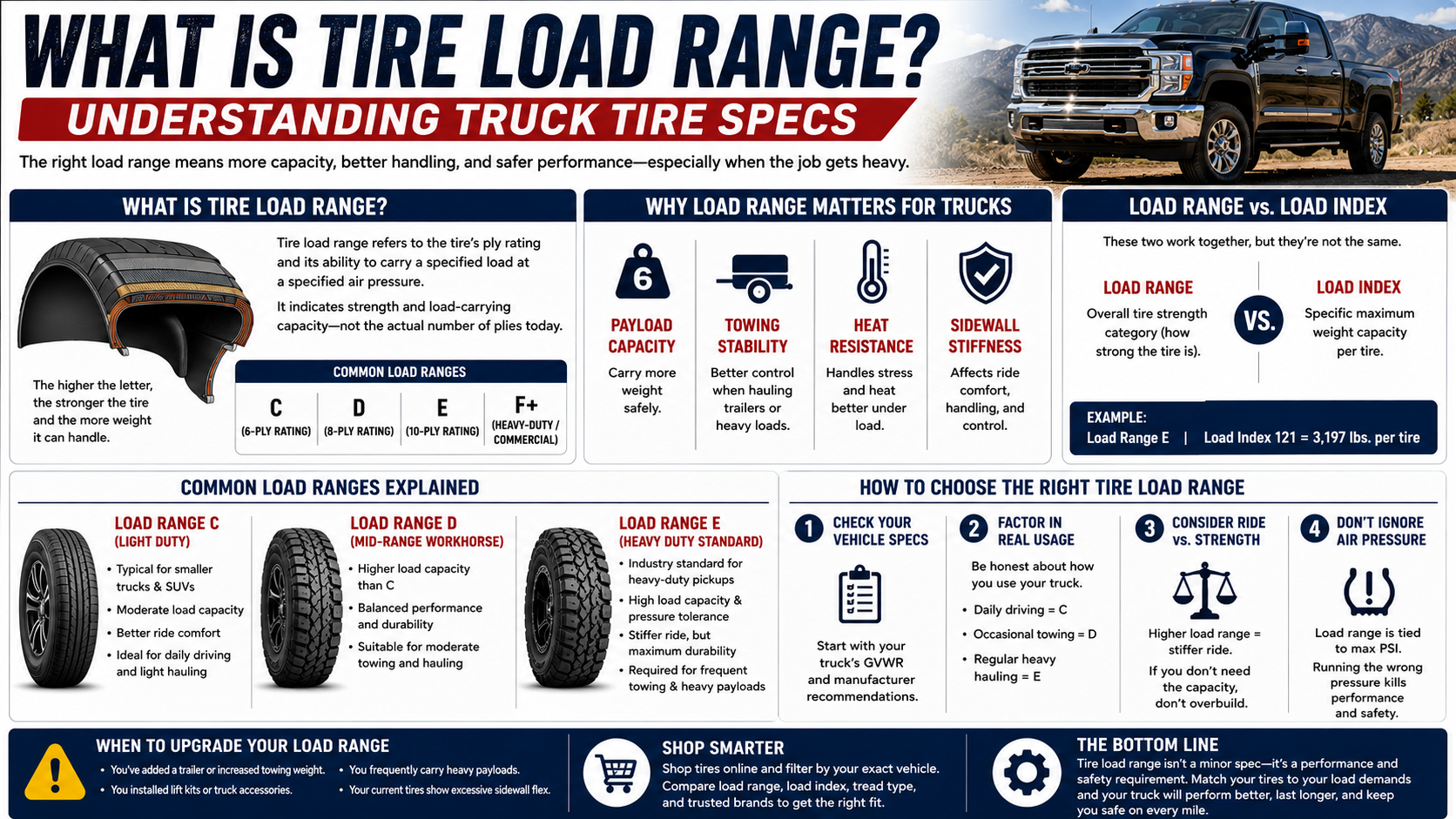
Tire load range refers to the tire’s ply rating and its ability to carry a specified load at a specified air pressure.
Historically, this was determined by the number of physical plies in a tire. Today, it’s a standardized rating system that represents strength and load-carrying capacity, not actual ply count.
You’ll typically see load ranges labeled as:
- Load Range C (6-ply rating)
- Load Range D (8-ply rating)
- Load Range E (10-ply rating)
- Load Range F and above (for heavy-duty/commercial use)
The higher the letter, the stronger the tire, and the more weight it can handle.
Why Load Range Matters for Pickup Truck Tires
Your tires are the only point of contact between your truck and the road. The load range on pickup truck tires directly impacts:
- Payload capacity: How much weight your truck can safely carry
- Towing stability: Critical when hauling trailers or equipment
- Heat resistance: Higher load ranges handle stress better under load
- Sidewall stiffness: Affects ride comfort and control
For example:
- A Load Range C tire may be fine for light-duty driving.
- A Load Range E tire is standard for heavy-duty pickups that tow regularly.
If you’re using your truck beyond daily commuting (construction, towing, off-road), this spec isn’t optional.
Load Range vs. Load Index: Know the Difference
This is where most people get it wrong.
- Load Range = Overall tire strength category
- Load Index = Specific maximum weight capacity per tire
For example, a tire might have:
- Load Range E
- Load Index 121 (which equals 3,197 lbs. per tire)
You need both numbers to make a correct decision. Load range gives you the class, while load index gives you the exact capacity.
Common Load Ranges Explained
Load Range C (Light Duty)
- Typical for smaller trucks and SUVs
- Moderate load capacity
- Better ride comfort
- Ideal for daily driving and light hauling
Load Range D (Mid-Range Workhorse)
- Higher load capacity than C
- Balanced performance and durability
- Suitable for moderate towing and hauling
Load Range E (Heavy Duty Standard)
- Industry standard for heavy-duty pickups
- High load capacity and pressure tolerance
- Stiffer ride, but maximum durability
- Required for frequent towing and heavy payloads
How to Choose the Right Tire Load Range
There’s no shortcut here; you match the tire to the job.
-
Check Your Vehicle Specs
Start with your truck’s Gross Vehicle Weight Rating (GVWR) and manufacturer recommendations. This sets your baseline.
-
Factor in Real Usage
Be honest about how you use your truck:
- Daily driving → Load Range C
- Occasional towing → Load Range D
- Regular heavy hauling → Load Range E
-
Consider Ride vs. Strength Tradeoff
Higher load range = stiffer ride
If you don’t need the capacity, don’t overbuild.
-
Don’t Ignore Air Pressure
Load range is tied to maximum inflation pressure. Running the wrong pounds per square inch (PSI) kills performance and safety. This is where regular TPMS service becomes critical.
The Hidden Impact: Alignment, Wear, and Suspension
Choosing the right tire is only part of the equation. If your setup isn’t dialed in, you’ll burn through even the best tires.
At Tom’s Tire Pros, we ensure your tires actually perform as intended with services including:
- Wheel alignment
- Suspension inspections
- Tire balancing
Do you have a mismatched alignment on a Load Range E tire? You’ll chew through expensive rubber fast.
When to Upgrade Your Load Range
You should consider upgrading if:
- You’ve added a trailer or increased towing weight.
- You installed lift kits or truck accessories.
- You frequently carry heavy payloads.
- Your current tires show excessive sidewall flex.
Upgrading isn’t about going bigger. It’s about matching capacity to demand.
Shop Smarter: Get the Right Tires Online
Guesswork is expensive. The smarter move is to shop tires online, filter by your exact vehicle, and compare:
- Load range
- Load index
- Tread type (all-terrain, highway, mud)
- Brand reliability
Tom’s Tire Pros gives you direct access to trusted brands like Michelin®, BFGoodrich®, and Continental, with fitment tools that eliminate bad decisions.
Full-Service Support Beyond Tires
Tires don’t operate in isolation. At Tom’s Tire Pros, you’re backed by:
- Complete auto repair services
- Diagnostics and suspension work
- Professional installation
- Ongoing maintenance support
Whether you’re upgrading your pickup truck tires or dialing in a work-ready setup, everything is handled under one roof.
Financing Heavy-Duty Truck Tires Can Make the Right Setup More Realistic
Higher load range tires are built for heavier payloads, towing stress, and increased pressure tolerance, but they also cost more than standard passenger tires. For truck owners replacing a full set of Load Range D or E tires, the upfront expense can add up quickly.
That’s why many drivers choose to finance truck tires directly through their tire shop. Instead of compromising on load capacity or delaying replacement, financing makes it easier to install the correct tire setup for the truck’s actual workload.
This can be especially important for:
- Towing applications
- Work trucks
- Lifted trucks
- Trucks carrying heavy equipment or cargo
- Drivers upgrading from light-duty tires
For many truck owners, financing helps prevent the mistake of choosing underbuilt tires simply to reduce upfront cost.
Why Dedicated Tire Shops Matter for Truck Tire Selection
Choosing truck tires is not just about size. Load range, load index, towing use, suspension setup, and inflation pressure all affect how the truck performs under real-world conditions.
Dedicated tire shops typically spend more time evaluating:
- Payload and towing requirements
- Sidewall stiffness and ride quality
- Suspension wear and alignment
- Tire pressure setup
- Long-term wear patterns under load
Instead of simply installing whatever matches the factory size, experienced truck tire shops help drivers build a tire setup that actually matches how the truck is used.
For towing and heavy-duty applications especially, that expertise can make a major difference in tire lifespan, handling stability, and overall safety.
The Bottom Line
Tire load range isn’t a minor spec; it’s a performance and safety requirement.
If your truck is underbuilt, you risk failure. If it’s overbuilt, you sacrifice comfort and efficiency. The right balance comes from understanding your load demands and choosing accordingly.
Ready to upgrade your truck’s performance?
Find the right fit for your vehicle and driving demands today.