
What Does a Tune-Up Consist Of?
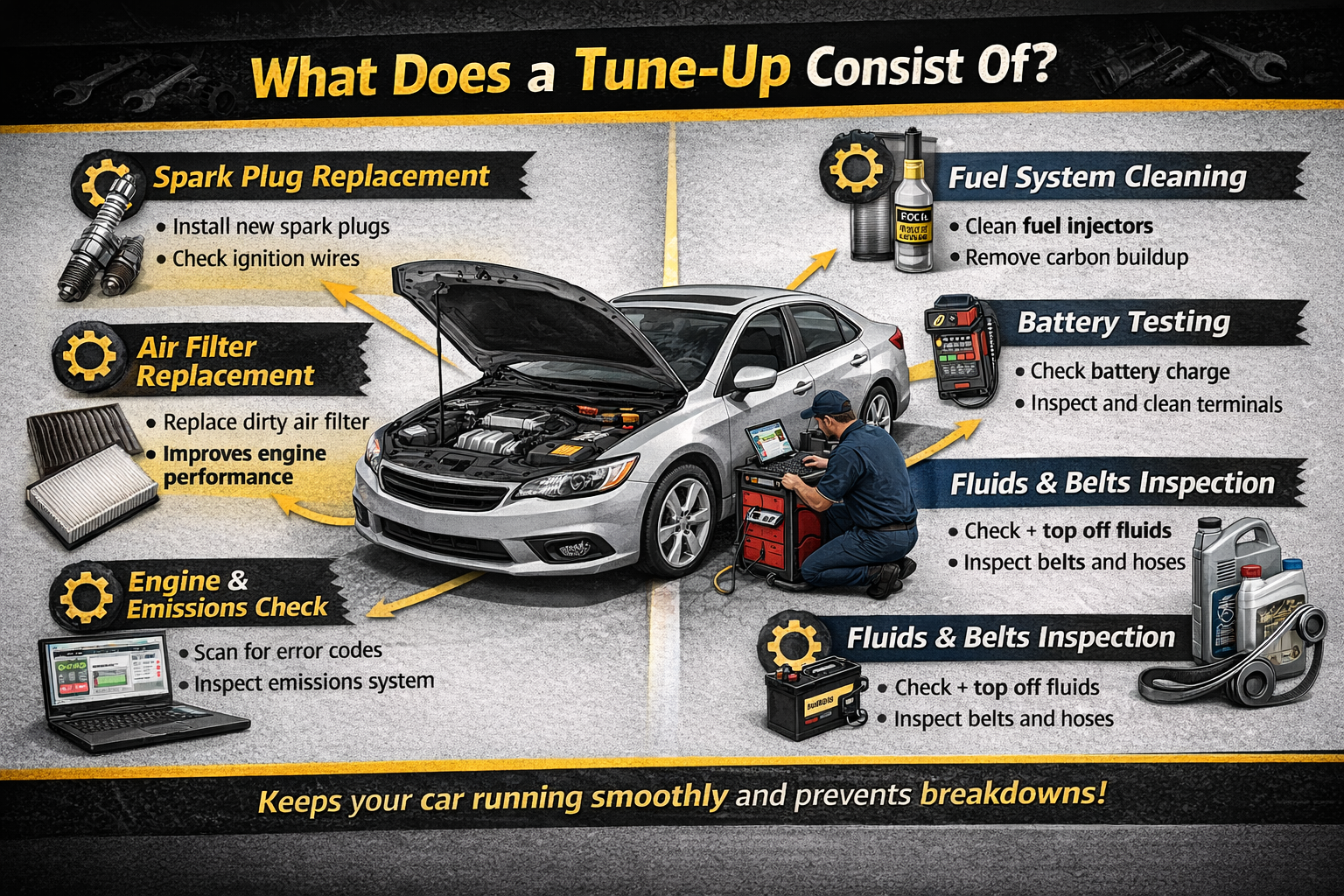
If you’re serious about performance on the highway, around town, or hauling heavy loads, you already know that reliability starts with proper maintenance. At Tom’s Tire Pros, we see firsthand how routine service protects engines, improves efficiency, and prevents costly breakdowns.
So, what does a tune-up consist of? Definitely more than just an oil change!
A modern tune-up is not just a quick parts swap. It’s a systematic inspection, replacement, and calibration process designed to restore engine efficiency, fuel economy, throttle response, and long-term reliability. Whether you’re commuting daily or preparing for a road trip across Texas, a proper tune-up is foundational to performance and safety.
The Purpose of a Auto Tune-Up
Historically, a tune-up meant adjusting carburetors and ignition timing. Today’s vehicles are computer-controlled, but the objective remains the same:
- Restore lost performance
- Improve fuel efficiency
- Reduce emissions
- Prevent breakdowns
- Extend engine life
In practical terms, a tune-up ensures your engine operates as it was engineered, no wasted fuel, no hesitation, no unnecessary strain.
Core Components of a Modern Tune – Up
While services vary slightly depending on vehicle make, model, and mileage, a comprehensive tune-up at Tom’s Tire Pros typically includes the following:
-
Spark Plug Replacement
Spark plugs ignite the air-fuel mixture inside the combustion chamber. Over time, they wear down, leading to:
- Misfires
- Rough idling
- Reduced fuel economy
- Sluggish acceleration
Replacing worn spark plugs restores proper combustion timing and efficiency.
-
Ignition System Inspection
Modern ignition systems include:
- Ignition coils
- Coil packs
- Plug wires (on older models)
Failing ignition components can cause intermittent misfires and trigger a check engine light. A proper tune-up includes inspection and testing to ensure consistent spark delivery.
-
Air Filter Replacement
Your engine needs clean airflow to maintain the correct air-fuel ratio. A clogged air filter restricts airflow and reduces efficiency.
Replacing the engine air filter:
- Improves throttle response
- Optimizes combustion
- Protects internal engine components
This is a simple but essential service that directly impacts fuel economy.
-
Fuel System Inspection or Cleaning
Deposits can build up in:
- Fuel injectors
- Throttle body
- Intake valves
Fuel system cleaning improves atomization and restores smooth performance. On modern direct-injection engines, maintaining clean intake components is essential for long-term reliability.
-
PCV Valve Check
The Positive Crankcase Ventilation (PCV) valve regulates internal engine pressure. A faulty PCV valve can cause:
- Oil leaks
- Sludge buildup
- Rough idle
It’s a small component, but it plays a major role in preventing internal damage.
-
Fluid Inspections
A full tune-up often includes checking important fluids such as:
- Engine oil
- Coolant
- Brake fluid
- Transmission fluid
While an oil change may be scheduled separately, it is often recommended during tune-up intervals to maintain proper lubrication and heat management.
What a Tune-Up Does NOT Include (But You Shouldn’t Ignore)
A tune-up focuses on engine performance, but it doesn’t replace full-service maintenance. If you want peak reliability and safety, consider complementary services such as:
- Comprehensive auto repair diagnostics for warning lights
- Professional wheel alignment to improve handling and tire life
- Expert car AC repair to keep your climate system operating efficiently
- Routine oil change service to prevent internal wear
- Accurate TPMS service to maintain proper tire pressure
Neglecting these systems can reduce performance, compromise safety, and lead to larger repair bills.
How Often Should You Get a Tune-Up?
Service intervals depend on the vehicle:
- Older vehicles: Every 30,000 miles
- Modern vehicles: 60,000-100,000 miles (depending on spark plug type)
- High-mileage vehicles: More frequent inspections recommended
If you notice any of the following symptoms, it’s time to schedule service:
- Hesitation under acceleration
- Decreased fuel efficiency
- Rough idle
- Engine knocking
- Check engine light
Waiting only increases the risk of more expensive repairs.
Signs Your Vehicle Is Overdue
Be straightforward. If your vehicle is experiencing:
- Hard starts
- Noticeable vibration
- Reduced power
- Increased exhaust emissions
- Higher fuel consumption
You’re likely overdue for maintenance.
Small issues compound quickly. Addressing them early saves time and money.
Why Tune Ups Matter for Long-Term Reliability
Engines operate under high heat and pressure. Over time:
- Spark degradation reduces combustion efficiency.
- Carbon buildup alters airflow.
- Ignition delays increase internal stress.
A properly timed tune-up prevents minor wear from escalating into major mechanical failure. Skipping routine maintenance can eventually lead to costly auto repair bills, far exceeding the investment in preventative service.
Tune-Ups vs. Full Diagnostic Services
A tune-up is preventive maintenance.
Diagnostics are reactive troubleshooting.
If your vehicle has deeper mechanical or electrical faults, a complete inspection may be required before performing tune up services. That’s where experienced technicians at Tom’s Tire Pros come in, evaluating everything from sensor performance to system efficiency.
The Bottom Line
So, what does a tune-up consist of?
At its core, it includes:
- Spark plug replacement
- Ignition system inspection
- Air filter replacement
- Fuel system cleaning or inspection
- PCV valve evaluation
- Fluid checks
But the bigger picture is simple: A tune-up restores efficiency, improves power delivery, and protects your engine.
At Tom’s Tire Pros, we’ve been serving drivers since 1976 with dependable, trustworthy service across Eastland, Abilene, and San Angelo. Whether you’re due for routine maintenance or need more advanced auto repair, our technicians are ready to help.
If your vehicle isn’t running the way it should, don’t wait. Book your appointment today and keep your engine performing the way it was designed to.